Amazon Prime Day is one of the biggest shopping moments of the year for DTC marketers. This year the event will go from Tuesday, June 23 through Friday, June 26, making it the earliest the event has run since 2021. Of course, building a solid Prime Day advertising strategy doesn't just start on Prime Day. It starts weeks before, across the channels that build the awareness, intent, and trust that actually drive conversions when the deals go live.
This post breaks down what's shaping D2C shopping behavior right now, where the smartest DTC marketing strategies are putting spend ahead of Prime Day 2026, and why the brands that win Prime Day are the ones showing up across the full funnel, not just at the bottom.
If you're still finalizing your channel mix or locking in your budget before it hits, read on to make sure you’re getting the most out of TV streaming advertising for this year’s Prime Day:
The Prime Day challenge for DTC brands
On one hand, Prime Day is a massive demand moment for DTC advertisers. Shoppers are in buying mode. Intent is high. If your brand shows up with the right offer at the right time, you can see meaningful volume.
On the other hand, Prime Day is a crowded, expensive environment. Social CPMs spike. Search costs surge. And if you haven't built brand awareness before the event, you're competing for attention against every other brand running Prime Day advertising at the same time, while paying premium prices to do it.
The DTC brands that consistently outperform during Prime Day are the ones that didn't wait for it. They started building awareness and purchase intent weeks before, through channels that don't get flooded the moment the event goes live.
That's the core of a smart Amazon Prime Day advertising strategy: use the lead-up period to fill the top and middle of your DTC marketing funnel, so that when Prime Day arrives, your lower-funnel spend is working with warm audiences instead of cold ones.
Where DTC brands should be putting their spend right now
If Prime Day is landing in June and you're finalizing your channel mix today, here's how to think about the pre-Prime Day window.
Social: Defend your position, but watch the ceiling
Meta and TikTok remain essential for DTC advertising. Social is where product discovery happens, and where retargeting can close the loop.
But as DTC growth expert Nik Sharma put it in a recent webinar with Paramount's Emily Huo:
"CPMs on Meta and TikTok keep going up. The privacy issues keep compounding. The creative fatigue is real. By the time you get to Q4, everybody's conversation is the same."
Social is necessary, but it's no longer sufficient, especially in the weeks leading up to a high-competition period like Prime Day, when costs spike and every competing brand is running the same playbook.
Search: Essential for intent capture, but downstream
Paid search is still the primary way DTC brands capture in-market intent. It's non-negotiable leading up to and during Prime Day itself.
But search is a downstream channel. It captures demand that already exists. In the weeks before Prime Day, your job is to create that demand, which is where upper-funnel channels come in.
Research from Paramount's CTV vs Social report shows that paid search conversion rates increase by 22.3% when supported by CTV exposure, and 51% of heavy CTV viewers search online after seeing something on TV. That's not a coincidence. That's the awareness-to-intent pipeline working the way it's supposed to.
CTV: The channel many DTC brands are under utilizing
The average DTC brand puts 30 to 80% of its paid media budget into social. But time spent on CTV now dwarfs time spent on social: viewers watch 2 hours and 35 minutes of TV per day versus 1 hour 31 minutes on social, and CTV viewership is near-universal, with more than 71% of U.S. households streaming CTV in 2026.
Nik Sharma, who spent years advising some of the fastest-growing ecom brands, made the case directly:
"3 years ago, I would say absolutely not to any CTV company. But today you've got infrastructure that lets you run CTV like a real performance channel. You've got pixel-based attribution, self-served buying. So you're not just buying a time slot anymore. You're buying the audience."
That infrastructure shift is what makes CTV (and more specifically, Paramount Ads Manager) one of the best advertising platforms for DTC brands heading into a major shopping moment like Prime Day.
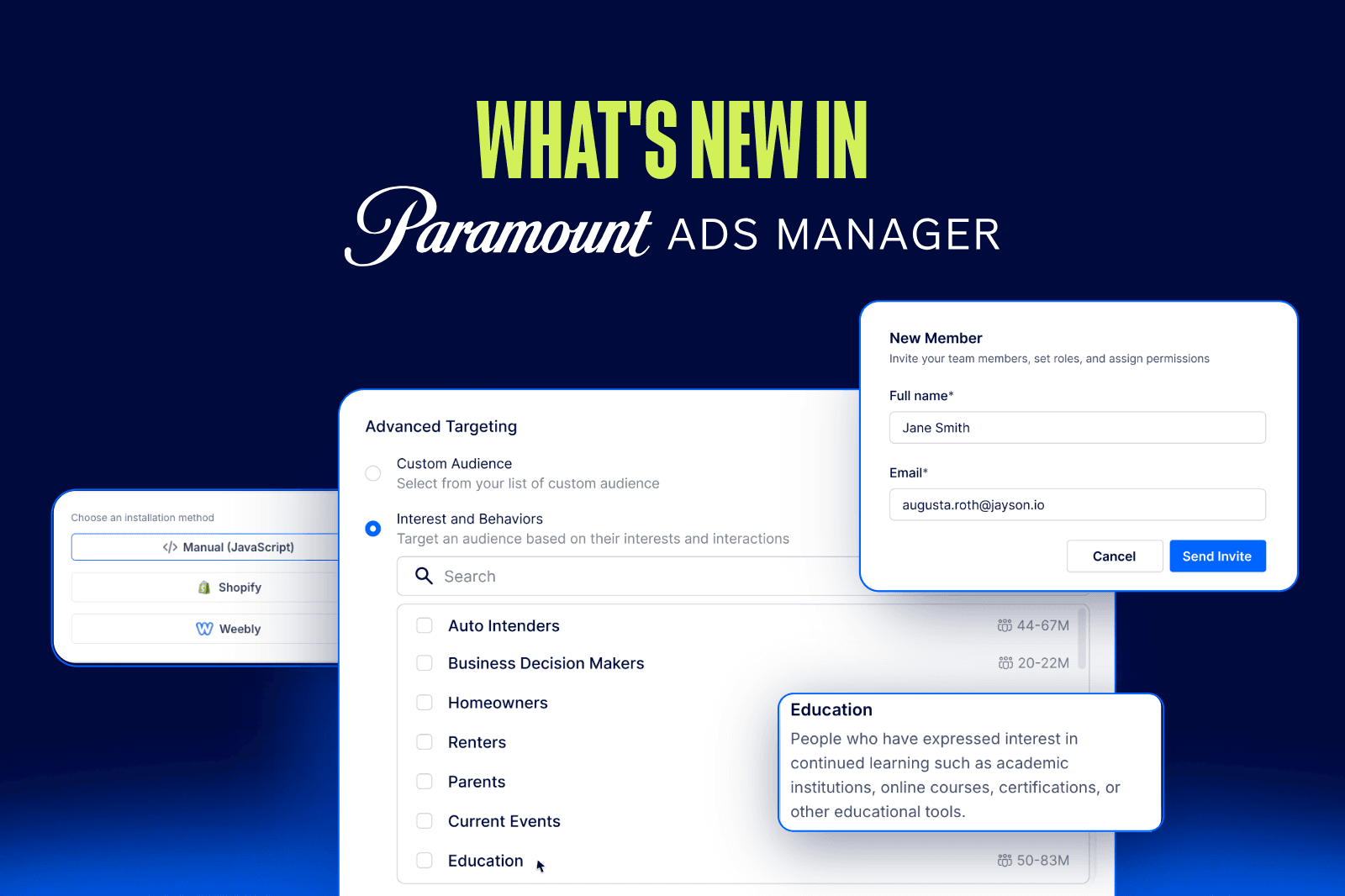
You can target in-market audiences, run retargeting against your site visitors, measure real downstream outcomes, and coordinate your messaging with the rest of your DTC marketing funnel, all within a self-serve platform that doesn't require agency support or minimum commitments.
What's driving D2C shopping behavior in 2026
Before you set your budget, it helps to understand what's actually shaping how consumers discover and buy from DTC brands today.
Here are a few of the DTC marketing trends reshaping how brands reach buyers:
1. Hyper-personalization is table stakes.
AI-driven systems now power product recommendations, email and SMS flows, and dynamic ad creative that adapts based on behavior and context. Over 60% of Gen Z and Millennials say AI tools influence their shopping decisions. (Source: McKinsey, 2025) DTC brands with access to first-party data have a built-in advantage here, and those activating that data in real time across email, social, and TV are seeing stronger loyalty and repeat purchase rates.
2. Customer acquisition costs are compounding.
CAC has risen more than 60% over five years, making retention, not just acquisition, the core growth strategy for DTC brands in 2026. Increasing retention by just 5% can boost profits by 25-95%, and acquiring a new customer still costs 5 to 25x more than keeping an existing one.
Brands heading into Prime Day with a strong existing customer base and retention playbook are better positioned to see returns on their advertising spend.
3. Social commerce keeps growing, but costs are rising.
TikTok Shop represented 66% of all social sales in 2025, and platforms are building out the entire customer journey inside the app, from discovery to checkout. A strong social commerce presence is no longer optional for DTC digital marketing. But relying on social alone is increasingly risky, as CPMs on Meta and TikTok continue to climb.
As DTC growth expert Nik Sharma noted in our recent webinar:
"CPMs on Meta and TikTok keep going up. The privacy issues keep compounding. The creative fatigue is real. By the time you get to Q4, everybody's conversation is the same."
4. Subscription models are expanding.
The convenience factor is winning. DTC brands with strong subscription offerings are seeing more predictable revenue and longer customer relationships, which makes them better positioned to invest in upper-funnel channels ahead of major shopping moments like Prime Day.
5. Fulfillment speed is a competitive differentiator.
Same-day and next-day delivery are increasingly expected. Brands that have invested in automation and micro-fulfillment are turning operational efficiency into a marketing advantage.
A workback guide to Prime Day marketing: How to structure your DTC funnel
4–6 weeks out (aka NOW): Build awareness with high-attention inventory
This is the moment to introduce or reinforce your brand with audiences who may be comparison shopping or entering purchase intent soon. CTV is particularly effective here because ads are full-screen, non-skippable, and viewed in a lean-back environment, meaning your message lands with more attention than a mid-scroll social ad.
Brands running always-on CTV campaigns during this window are building the familiarity that pays off when Prime Day hits. Especially when you take into consideration that CTV ads drive 80% brand recognition, compared to 60% for social ads.
With a platform like Paramount Ads Manager, you can align campaigns with premium content your target audience is actively watching, whether that's a hit drama, reality programming, or live sports, so your brand shows up in the moments that carry real attention.
Peak Placement automatically optimizes delivery across Paramount's most-watched content, maximizing reach during peak viewing windows without requiring manual management. That's what marketing automation tools for DTC brands with dedicated support actually looks like in practice.
2–3 weeks out: Layer in targeting and retargeting
Once your awareness campaign is running and your pixel is collecting data, it's time to activate retargeting. This is where DTC advertising measurement starts to get interesting.
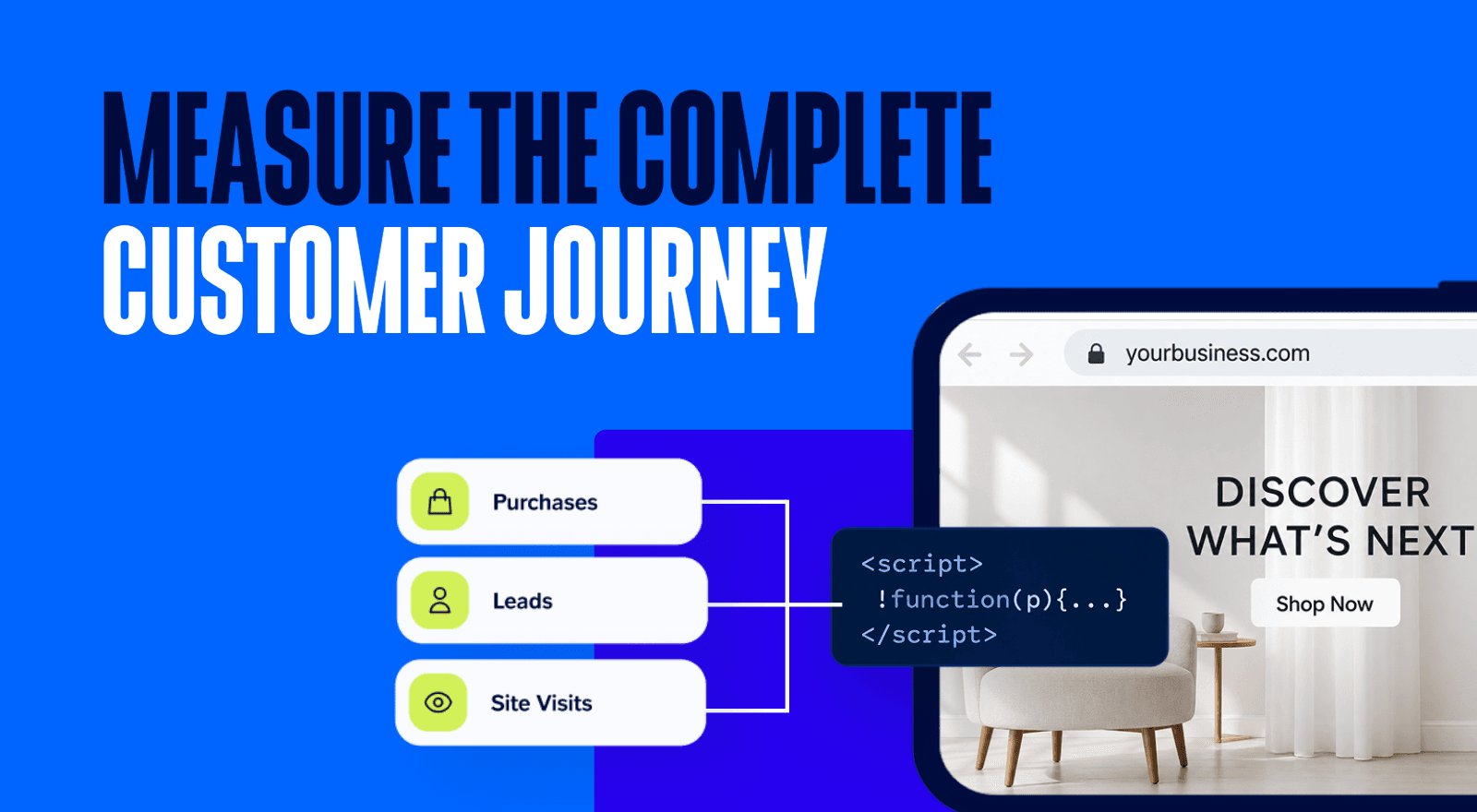
Install the Paramount Ads Manager Pixel on your site so you can:
- Retarget site visitors on the big screen
- Build lookalike audiences based on your best customers
- Segment by behavior and layer in interest-based targeting to reach audiences already showing purchase intent
eCommerce brand Midwest Photo ran an A/B test with Paramount Ads Manager comparing a standard CTV campaign to one with retargeting enabled. The retargeting campaign drove approximately 41% higher site visit rate and ~29% more efficient spend. That's the compounding effect of building awareness first, then converting it.
This is also when sequential messaging earns its place in your DTC advertising strategy. Instead of showing the same ad on repeat, guide viewers through a series that builds understanding: awareness ad, product feature, offer or urgency.
Prime Day week: Focus spend on warm audiences
By the time Prime Day arrives, your retargeted audiences are warm. Your brand recognition is higher. Your search and social ads are landing on people who've already seen you on TV.
This is when the CTV Peak Performance Effect kicks in: adding CTV to a campaign increases paid social conversion rates by +8.5% and paid search conversion rates by +22.3%. Audiences who've been exposed to your brand on streaming TV are more likely to click, search, engage, and convert.
In our webinar with agency Compound Growth Marketing, the Better Together approach of pairing CTV with social drove:
- 60% greater reach versus social alone
- 14% higher click-through rate among exposed audiences
- 313% higher likelihood to complete a lead form
That's not a simple branding play. That's D2C advertising that compounds across the funnel.
Why premium CTV inventory matters for DTC brands
According to The Trade Desk's Premium Payoff Report, premium media environments drive a 40% increase in purchase intent and are 30% more effective than less premium environments. And 85% of respondents said premium environments increase trust in advertisers.
For DTC brand marketing, where trust and authenticity are core to why consumers choose to buy directly, that context carries real weight. As Nik Sharma put it during our webinar, "Where you run matters. Premium content is a different environment."
The best streaming TV advertising for DTC brands puts your message alongside content people are actively choosing to watch. On Paramount's network, that includes premium originals, sports, reality, and cultural tentpoles, with a 21% higher ad attention rate than other AVOD services. *(Source: TVision, Q4 2025) *
For Prime Day planning specifically, that premium environment matters because it's the brand-safe, high-attention context that distinguishes you from the noise, especially in a period when every brand is running Amazon Prime Day advertising and shoppers have their guard up.
DTC advertising automation: letting the platform do the heavy lifting
One of the biggest advances in DTC advertising measurement and dtc advertising automation is With Paramount Ads Manager's Peak Placement, campaigns automatically optimize delivery across top-performing content, maximizing reach during peak viewing moments without requiring you to manually manage placements.
Combined with the Paramount Ads Manager Pixel for conversion tracking, you get a real-time view of how your spend is performing, including site visits, purchases, and cost per visit.
This is what DTC marketing automation looks like in practice: you set your goals, build your audience, and let the system find the highest-value moments to deliver your message. It connects awareness, targeting, measurement, and optimization in one place, making Paramount Ads Manager one of the best advertising platforms for DTC brands heading into a major shopping moment like Prime Day.
Ready to build your Prime Day advertising strategy?
Prime Day rewards preparation. The brands that show up strongest on the day itself are the ones that started filling their funnel weeks earlier, in channels that don't spike in cost the moment the sale goes live.
With Paramount Ads Manager, you can:
- Launch a CTV campaign today through our self-serve platform
- Target in-market audiences by interest, behavior, geography, and more
- Install the Paramount Ads Manager Pixel to track real downstream outcomes
- Access premium inventory across Paramount+, CBS, CBS Sports, Pluto TV, and more
- Get your creative TV-ready through our free Creative Plus service
No minimums. No agency required. Sign up today, get your brand on TV tomorrow (or at least before Prime Day!)
LATEST INSIGHTS
RECOMMENDED


LANDMAN | PARAMOUNT+