
What does it look like when two people who’ve been at the forefront of every major shift in advertising sit down to talk about the future of CTV performance marketing?
Nik Sharma has spent the last decade scaling some of the fastest-growing DTC and ecommerce brands, earning him his well-deserved title “The DTC Guy.” He’s also one of the most vocal performance marketers on the shift toward connected TV advertising as a measurable growth channel.
Emily Huo has a track record of building advertising businesses early at Twitter, Reddit, and Spotify each tied to a new wave of attention, from social to community to audio. Now leading SMB Advertising at Paramount, she’s focused on the next biggest untapped opportunity for performance-driven advertisers: CTV.
In our recent webinar, What the Fastest-Growing Ecom Brands Figured Out About TV, the two joined forces to break down how connected TV fits into the modern marketer’s media mix especially for performance marketing teams already running paid social, paid search, and retargeting at scale.
Read on for the six biggest CTV performance marketing takeaways from the conversation, then sign up to watch the full on-demand recording.
1. The CTV Performance Marketing Opportunity: Where Attention and Ad Spend Diverge
Most performance marketing budgets are still heavily concentrated in paid social. According to findings from our CTV vs. paid social benchmark report, around 30% of advertising budgets are allocated there - and in Nik’s experience, many of the DTC brands he advises are closer to 70–80%.
On the other hand, only around 9% of digital ad budgets are allocated to connected TV advertising (also from the report). The viewing data tells a very different story.
“CTV viewing is 100 minutes and the average social session is 8 minutes… Attention lives on TV. Budgets are still on social. The gap, that’s the opportunity.” - Nik Sharma
That mismatch between consumer attention and media spend is exactly where DTC and ecommerce brands are leaving CTV performance on the table.
This isn’t an argument to pull back from paid social performance-driven brands invest there for a reason: it converts. But it is a reminder that your current media mix may be over-indexed in one channel while underutilizing connected TV a channel that can generate the upper-funnel demand your lower-funnel campaigns depend on.
2. CTV Now Behaves Like a Performance Marketing Channel
A few years ago, most performance marketers avoided TV advertising altogether. Without pixel-based attribution, show-level reporting, or measurable downstream outcomes, CTV looked like a brand-only channel and Nik was one of its loudest skeptics:
“3 years ago, I would say absolutely not to any CTV company… You can't measure TV the same way you can measure [social]. But now you actually can, right? You've got pixel-based tracking. You have show level reporting, which is important because with Paramount, you actually buy against real shows people watch… So, you're not just buying a time slot anymore. You're buying the audience." - Nik Sharma
What’s changed is how CTV campaigns can be executed and measured, especially through self-serve platforms like Paramount Ads Manager:
- Advanced CTV audience targeting Interests and Behaviors, Custom Audiences, and Lookalike Audiences modeled off your first-party data
- CTV retargeting based on past site visitors and viewers who’ve already engaged with your ads
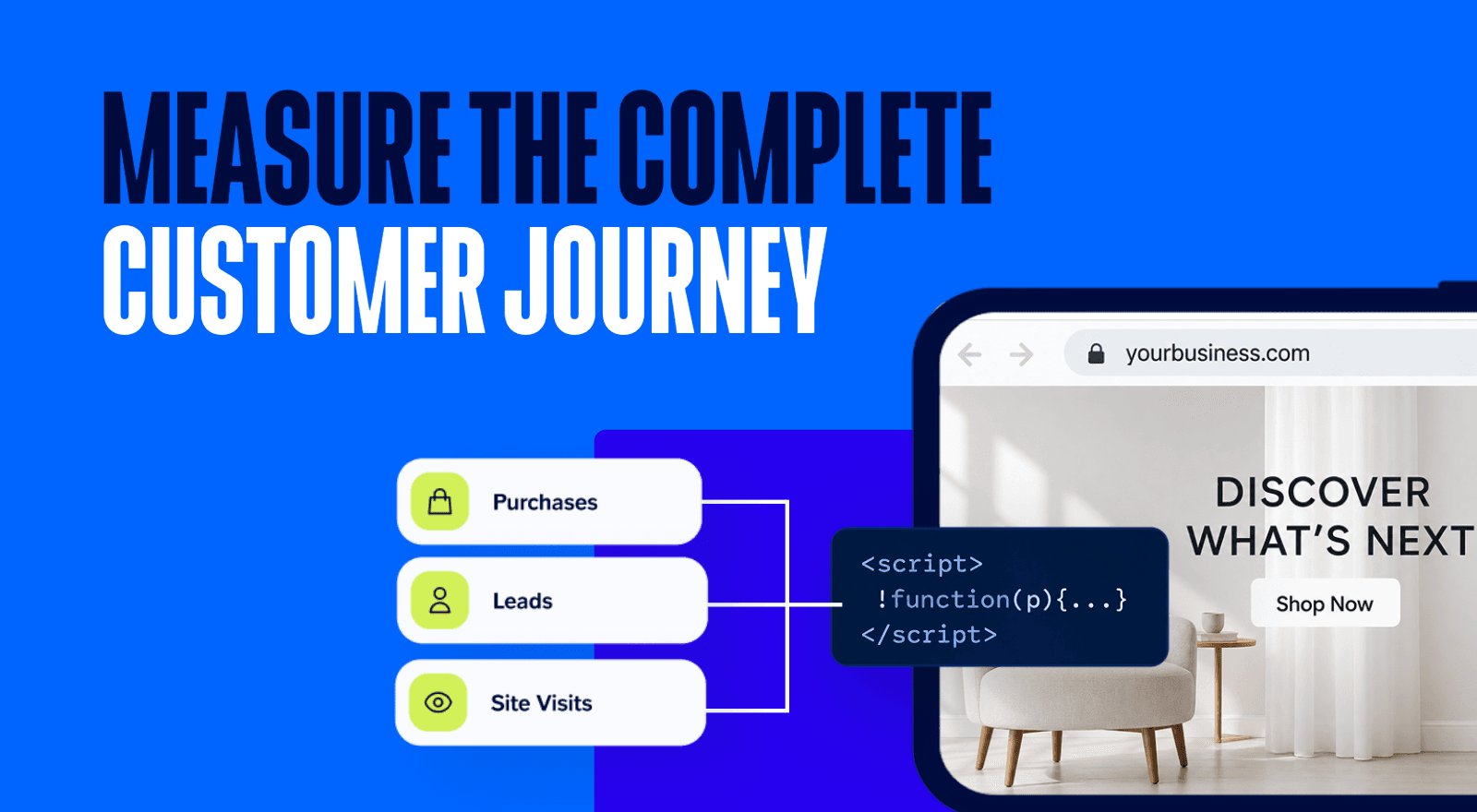
- Pixel-based CTV attribution that ties ad exposure to real performance outcomes site traffic, purchases, ROAS, and incremental lift
With those layers in place, connected TV looks far less like a black box and much more like an extension of the performance marketing stack DTC and ecommerce teams already run.
“At my core, I'm a performance marketer, right? I also have a team that is running paid media ads and I think I would be foolish to tell them to spend money on things that we cannot track and understand. There's been significant strides made [in CTV], especially on the Paramount side, where we're really thinking about the marketer experience and bringing it all together through a self-serve ads platform like Paramount Ads Manager." - Emily Huo
3. CTV Advertising Drives Incremental Lift Across the Full Marketing Funnel
The biggest shift in how performance marketers think about connected TV isn’t how CTV performs on its own - it’s how CTV lifts every other channel in the funnel.
"[CTV] is going to lift everything. Your branded search, your ROAS on Meta because warmer audiences are landing. And it gives you a better top of funnel that didn't exist before, where TV runs alongside [social] and these channels work together." - Nik Sharma
When a consumer sees your brand on premium streaming TV, it changes how they respond everywhere else. Instead of discovering you for the first time in a feed, they already recognize your brand and your downstream channels benefit (what we call the Peak Performance Effect):
- Higher conversion rates on paid social campaigns
- Increased branded search volume and lower CPCs on brand keywords
- More efficient CTV retargeting and remarketing performance
- Stronger blended CAC across the full marketing funnel
So don’t treat CTV advertising as a standalone channel. It’s a full-funnel multiplier that makes everything else you’re doing work harder and lets your team work smarter.
4. Premium CTV Inventory Drives Premium Performance Outcomes
Not all CTV impressions carry the same weight. Where your ad runs and the mindset viewers are in when they see it shows up directly in attention, brand recall, and downstream performance metrics.
"These are 15 and 30 second non-skippable full screen ads. Your audience is choosing to watch something they actually chose to watch, not just scrolling past your ad at 11 p.m. So the state of mind here is also really interesting because somebody's actually leaned in versus just leaning back." - Nik Sharma
With Paramount Ads Manager, brands run alongside some of the most-watched premium streaming content on TV - across the networks driving the biggest cultural moments:
- Paramount+ The #1 fastest-growing streaming subscription service three years running (Source: Antenna Research, Share of SVOD Sign-Ups, Jan 2023–Dec 2025, US Only)
- Major debuts like Marshals, which drew 20.6M viewers at season premiere (Source: Nielsen Panel+ Big Data P2+ Prime AA, L+7, 2/23–3/01/2026 + Nielsen SCR 7-Day Total)
- 21% higher ad attention rate vs. other AVOD services . (Source: TVision, 4Q’25, Attention to Duration. Competitive set: Netflix, Hulu, HBO Max, Disney+, Prime, Peacock)
- CBS Sports, NFL on CBS is the most-watched window in all of TV (Source: Nielsen Big Data+ Panel, Live + SD, 9/4/25–1/25/26; excludes Super Bowl)
- CBS, where die hard fandom lives on shows like CSI and Survivor - the #1 most social reality series among A25-54 even after 50 seasons (Source: Nielsen NPM, 9/15/24 Live+ 35 includes VOD 8+, CBS and Paramount Global internal data, AMA for first 35 days of FEP on Paramount+ and CBS TVE (CBS.com and CBS app); Streaming Total Viewers includes co-view for CTV viewing)
- PlutoTV, 94% of viewers say the ad experience is better or the same vs. other streaming services (Source: Pluto TV User Exploration 2025)
This is premium streaming content audiences actively choose to watch so attention and engagement are built in. You’re not interrupting passive scrolling. You’re part of an experience viewers are already invested in. That has a direct impact on attention, brand recall, and downstream CTV performance.
When your brand shows up in moments people care about, the lift carries through the rest of the funnel.
5. How to Plan CTV Campaigns Around Peak Viewing Moments and Seasonal Tentpoles
In CTV media planning, timing matters more than most performance marketing teams expect. Shows, live sports, and seasonal tentpoles create predictable spikes in attention and purchase intent. Brands that build their CTV calendar around those moments show up when audiences are most engaged and convert most efficiently.
Emily broke down the seasonal playbook:
“I think about the springtime as a way to build awareness for the market. At Paramount, there are a lot of shows coming out in the spring, so use that time to start your campaigns on TV, build that awareness, and install the Paramount Ads Manager pixel so you can start collecting that viewership data. Then in the fall that's where you've already built out a lot of the awareness and you can then double down on sales. So, back to school, holidays, and again, that time also coincides with a lot of our fall lineup releases like Landman Season 3. I think about the fall time as like the start of your larger holiday campaigns, which is of course a very really busy time for all marketers. So, if I had to break this down simply, what do you want to do in the spring and then how does that lead into your fall, which then leads into your holiday planning?” - Emily Huo
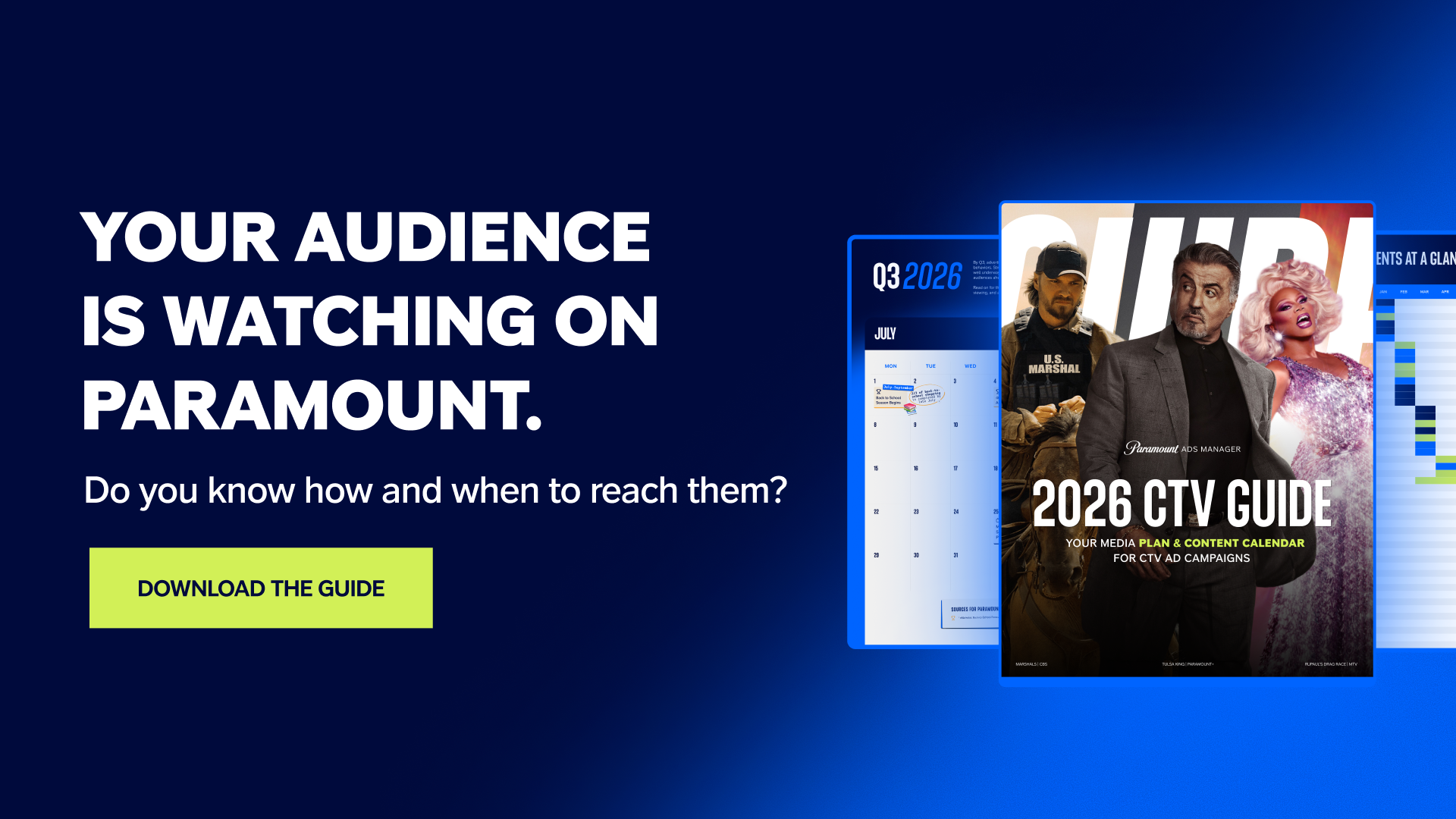
Still not sure where to start with your CTV media planning calendar? Download the (https://adsmanager.paramount.com/insights/2026-ctv-guide-media-planning-calendar) for a full-year calendar of premieres, cultural tentpoles, and seasonal opportunities plus best practices for building a full-funnel CTV strategy.
6. How to Get Started with Self-Serve CTV Advertising
One of the biggest shifts in connected TV advertising is accessibility. Self-serve CTV platforms have opened the door for DTC, ecommerce, and SMB advertisers to run measurable campaigns on the biggest screen in the home — without months of media planning or massive upfront commitments.
“The self-serve infrastructure exists. So you can start tomorrow. Log in, set a budget, pick your audience, launch.” - Nik Sharma
With Paramount Ads Manager, performance-driven advertisers can:
- Launch self-serve CTV campaigns through an intuitive platform built for marketer experience
- Set flexible budgets starting at $500 and build on what works
- Access premium CTV inventory across TV’s biggest shows, live sports, and movies
- Use built-in CTV tools for audience targeting, ad creation, and campaign measurement
- Install the Paramount Pixel to track real CTV performance outcomes — site traffic, purchases, ROAS, and incremental lift
For performance marketing teams already running paid social and paid search, the learning curve is minimal. The difference is the environment your ads run in — and the role CTV plays in the broader funnel.
Sign up today, get on TV tomorrow >
Watch the full webinar
This recap covers the highlights, but the full session goes deeper into targeting, measurement, and real campaign examples.
Access the full recording to learn how to turn CTV into a measurable growth lever with Paramount Ads Manager.
LATEST INSIGHTS
RECOMMENDED


LANDMAN | PARAMOUNT+